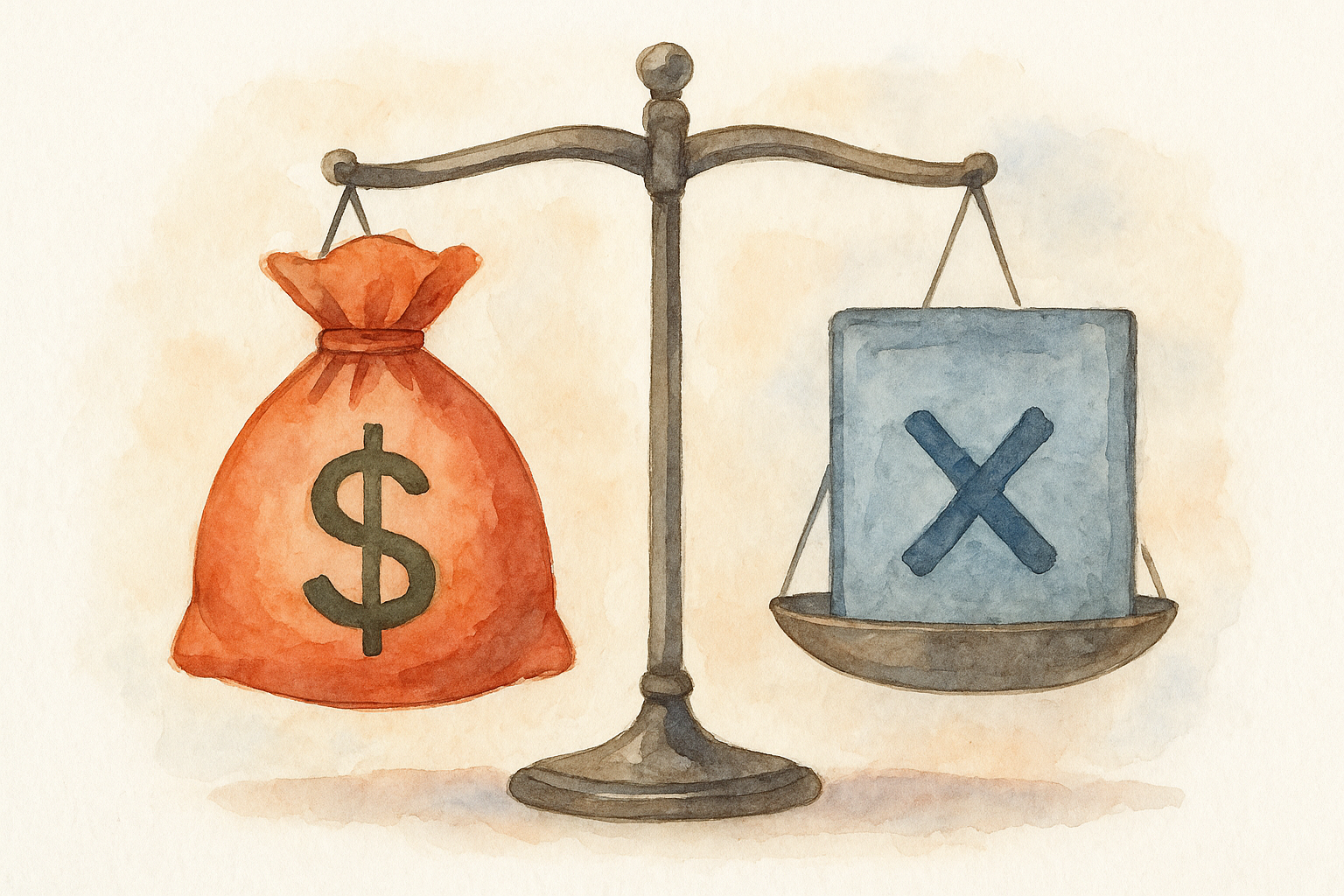
Allowance for Doubtful Accounts is a contra-asset account that companies use to estimate the portion of accounts receivable unlikely to be collected. Rather than waiting until a specific customer defaults, firms record an expected loss periodically to match revenue with the probable expense in the same period. This approach aligns with accrual accounting principles and helps present a more realistic view of net receivables on the balance sheet.
Recording an allowance improves the reliability of financial statements by reducing the volatility that would result from recognizing bad debt only when a specific account is written off. Management typically bases the estimate on historical collection experience, customer credit quality, current economic conditions, and aging of receivables. The allowance therefore serves both as a practical bookkeeping mechanism and as a signal to stakeholders about credit risk and collection expectations.
##Similar Accounting Terms
Allowance for Doubtful Accounts is often discussed alongside several other accounting concepts that relate to receivables and credit risk. Clarifying these terms helps prevent confusion when reviewing financial statements or preparing internal reports.
Bad Debt Expense describes the cost recognized on the income statement for receivables deemed uncollectible during the reporting period. When a company estimates that some customers will not pay, it debits bad debt expense and credits the allowance for doubtful accounts. This pairing preserves the matching principle by linking anticipated collection losses to the period in which the revenue was earned.
###Accounts Receivable Net Of Allowance
Accounts receivable are typically reported net of the allowance for doubtful accounts on the balance sheet. Presenting receivables net provides users with a clearer picture of the amount the company expects to convert into cash. Because the allowance reduces total receivables, it prevents overstating current assets and inflating liquidity ratios.
###Aging Schedule And Allowance Calculation
An aging schedule segments accounts receivable by how long invoices have been outstanding. Companies often apply different default rates to each aging bracket, reflecting the higher probability of nonpayment as receivables age. This method supports a more granular allowance for doubtful accounts calculation and can be more responsive to shifting collection patterns compared with a simple percentage-of-sales approach.
####Specific Vs. General Reserves
Some organizations maintain both a specific reserve for known troubled accounts and a general reserve for the portfolio’s inherent risk. The specific reserve addresses identifiable doubtful accounts, while the general reserve captures anticipated losses from unknown future defaults. Together they form the total allowance for doubtful accounts reported on the balance sheet.
##Common Misconceptions
Several misconceptions surround the allowance for doubtful accounts, often arising from misunderstandings about accrual accounting and management judgments. Correcting these misbeliefs improves interpretation of financial statements and decision-making.
A common myth is that the allowance is a separate pool of cash set aside to cover bad debts. In reality, the allowance for doubtful accounts is an accounting estimate presented as a contra-asset; it does not represent cash or a restricted fund. When a customer actually defaults, the company writes off the receivable by reducing both accounts receivable and the allowance. No cash changes hands at that moment.
###It Eliminates Credit Risk
Another misconception is that maintaining an allowance eliminates credit risk. The allowance merely estimates expected losses; it does not remove the underlying risk that customers may fail to pay. Companies still need robust credit controls, monitoring, and collection processes to manage exposure effectively.
###It Is A Precise Measurement
Some stakeholders expect the allowance for doubtful accounts to be a precise measure of future losses. Because it is based on estimates, however, significant judgment is involved. Different estimation techniques—percentage of sales, percentage of receivables, aging schedules, and more sophisticated statistical models—can produce different allowance amounts. Changes in economic conditions or customer behavior may reveal that prior estimates were optimistic or conservative, requiring adjustments.
####Allowance Adjustments Reflect New Information
When an allowance is adjusted, it often reflects new facts or a change in management’s expectations. For instance, if a major customer declares bankruptcy, the allowance may be increased to reflect that specific loss. Conversely, improved collection trends could justify a reduction. Such adjustments flow through bad debt expense and may affect profitability in the period they are recorded.
###It’s Optional Under GAAP
Some assume that the allowance is optional under accounting standards. Under U.S. GAAP and IFRS, entities following accrual accounting are expected to recognize losses that are probable and can be reasonably estimated. For receivables, that typically means recording an allowance for doubtful accounts if uncollectible amounts are foreseeable. Failure to do so can misstate assets and earnings and may violate reporting standards.
##Use Cases
The allowance for doubtful accounts plays a practical role across multiple business functions—financial reporting, budgeting, risk management, and lending discussions. Recognizing when and how to use this estimate helps companies manage both internal operations and external expectations.
Financial reporting relies on the allowance to present a realistic measure of collectible receivables and net income. Public companies and larger private firms often disclose their allowance methodologies in the notes to the financial statements, including aging buckets, historical loss rates, or significant judgments. This transparency aids analysts and creditors in assessing the quality of receivables and the conservatism of management’s estimates.
###Internal Credit Management And Forecasting
Beyond reporting, companies use the allowance to inform credit policies and forecast cash flows. A rising allowance for doubtful accounts may indicate deteriorating customer credit quality or macroeconomic stress, prompting tighter credit terms or increased collection efforts. Forecast models that incorporate allowance trends provide more accurate expectations of future cash receipts and working capital needs.
####Scenario Analysis And Stress Testing
Companies frequently perform scenario analysis to test how sensitive receivable collections are to adverse conditions. By simulating higher default rates and increasing the allowance for doubtful accounts accordingly, management can evaluate potential cash shortages and liquidity pressures. These stress tests help shape contingency planning and capital management.
###Tax And Regulatory Considerations
Tax authorities often prescribe their own rules for recognizing bad debt deductions, which may not align with accounting estimates for financial reporting. For tax purposes, a deduction may only be allowed once a debt is actually written off, or if specific criteria are met. Consequently, the allowance for doubtful accounts may affect taxable income differently from book income, requiring careful reconciliation and disclosure in tax filings.
####Loan Covenants And Lender Communication
Lenders pay close attention to allowances because they directly affect reported assets and leverage ratios. Significant increases in the allowance for doubtful accounts can reduce collateral values and potentially trigger covenant breaches. Proactively communicating the reasons for allowance changes—such as economic downturns or concentrated credit exposures—can help preserve lender relationships and avoid surprises.
###Practical Examples And Implementation Tips
Small to midsize companies might start with a simple percentage-of-receivables approach, adjusting rates based on age and customer segments. Larger organizations often implement automated processes that tag accounts based on customer credit scores, industry risk, and payment behavior to compute a more dynamic allowance. Regular reconciliation of write-offs against the allowance and periodic back-testing of estimates against actual losses will improve accuracy over time.
Allowance for Doubtful Accounts can also be integrated into enterprise resource planning systems, where aging, dunning activities, and customer communications feed into the estimation model. This linkage creates a tighter feedback loop between collection performance and the allowance, making financial reporting more current and management responses timelier.