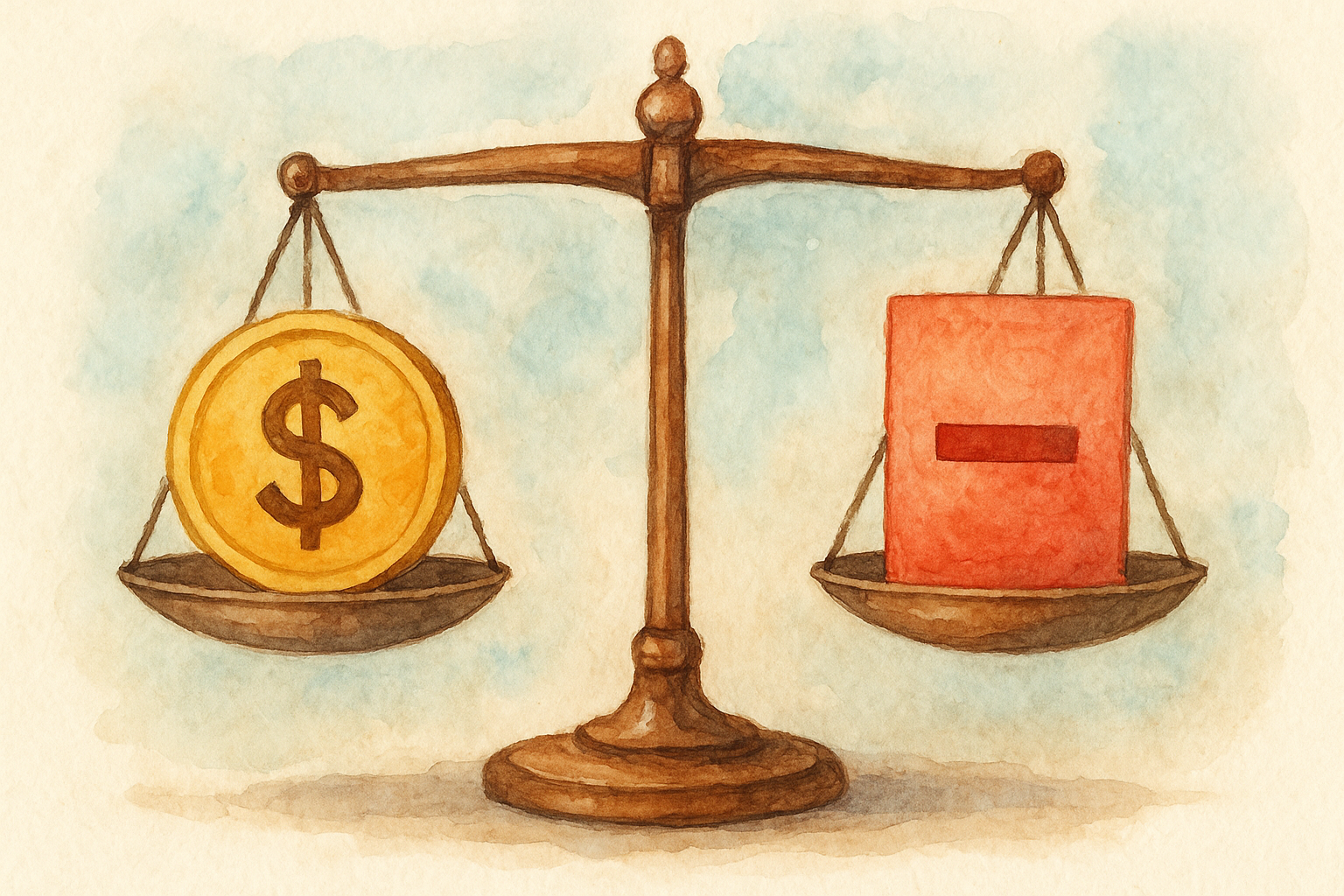
A contra asset is an account used in accounting to reduce the carrying amount of a related asset on the balance sheet. Instead of recording a direct deduction in the asset’s ledger, accountants maintain a separate contra asset account—such as accumulated depreciation or allowance for doubtful accounts—that carries a credit balance and offsets the paired asset’s debit balance. This approach preserves the historical cost of the asset while transparently showing adjustments that reflect wear, obsolescence, or expected losses.
Maintaining contra asset accounts improves financial statement clarity and helps users evaluate the net realizable value of assets. Under both GAAP and IFRS, contra asset treatment is common practice for items like depreciation, bad-debt estimation, and inventory valuation allowances. Properly understanding how a contra asset functions, how it’s presented, and how it affects financial ratios is essential for accountants, analysts, and business owners.
## Similar Accounting Terms
Contra asset is often discussed alongside related accounting concepts that can be confused with or complement its use. These comparable terms include valuation allowance, contra liability, reserve accounts, and impairment. Each has a distinct purpose, presentation, and normal balance.
A valuation allowance is conceptually similar because it reduces the reported value of an asset, but the term is broader and sometimes used interchangeably with contra asset for specific asset categories. For example, an allowance for doubtful accounts is a valuation allowance and also a contra asset—it specifically offsets accounts receivable.
### Contra Liability And Contra Equity Versus Contra Asset
Contra liability and contra equity accounts reduce liabilities and equity balances, respectively, in a manner analogous to how a contra asset reduces asset balances. Unlike a contra asset (which has a normal credit balance), a contra liability typically carries a debit balance and reduces the related liability. Contra equity accounts, such as treasury stock (when accounted as a contra equity), also reduce owners’ equity.
### Valuation Allowance Versus Contra Asset
The distinction between a valuation allowance and a contra asset can be one of terminology and context. A valuation allowance is a broader concept that may be applied as part of asset impairment or write-down procedures. When that adjustment is maintained as a separate ledger account that offsets an asset, it effectively functions as a contra asset. Examples include an inventory obsolescence reserve or an allowance for loan losses.
#### Presentation Differences On The Balance Sheet
Contra asset accounts are presented on the balance sheet next to or directly beneath their related asset, showing the gross asset value and the contra balance that yields the net book value. This format presents transparency—users can see both original cost and the reduction, rather than only a single net figure.
## Common Misconceptions
Despite being a fundamental accounting concept, contra asset accounts are the subject of several common misconceptions that can lead to misinterpretation of financial statements.
One widespread misconception is that a contra asset is a liability. In reality, a contra asset is still an asset-type account; it simply carries a credit balance to offset a related asset’s debit balance. The contra asset reduces the net amount reported for that asset, but it does not represent an obligation like a true liability.
### Misunderstanding The Role Of Accumulated Depreciation
Many readers misread accumulated depreciation as an expense or think it reduces the expense accounts. Accumulated depreciation is a contra asset, not an expense account. Depreciation expense flows through the income statement; accumulated depreciation accumulates those periodic charges on the balance sheet to reduce the gross value of property, plant, and equipment over time.
### Confusion Between Reserves And Liabilities
Another misperception is the belief that reserves (such as inventory reserves or allowance for doubtful accounts) create future cash outflows like liabilities. While reserves signal potential losses or reductions in recoverable value, they do not, by themselves, represent an obligating event that will necessarily result in cash outlay. They are estimates recorded as contra asset balances to reflect diminished asset realizable value.
#### Incorrect Assumptions About Reversibility
Some users assume contra asset adjustments are always reversible. While allowance accounts often fluctuate and can be adjusted upward or downward as estimates change, certain write-downs or impairment losses may be permanent under accounting rules and not simply reversible without meeting specific criteria.
## Use Cases
Contra asset accounts are used across a range of scenarios where showing both the gross asset value and the deduction is useful for financial reporting clarity and regulatory compliance. Typical use cases include accumulated depreciation for fixed assets, allowance for doubtful accounts for receivables, and inventory obsolescence reserves.
A practical understanding of these use cases helps explain how businesses reflect wear, expected losses, or valuation adjustments without erasing historical cost information.
### Accumulated Depreciation For Tangible Fixed Assets
One of the most common contra asset applications is accumulated depreciation. A company capitalizes a piece of equipment at historical cost when purchased. Each accounting period it recognizes depreciation expense on the income statement, and credits an accumulated depreciation contra asset on the balance sheet. The paired presentation—equipment at cost minus accumulated depreciation—yields the equipment’s net book value.
Example: Purchase machinery for $100,000 with a 10-year straight-line life and no salvage. Annual depreciation expense is $10,000. The journal entry to record the annual charge credits accumulated depreciation (a contra asset) for $10,000, increasing its credit balance and reducing net PPE on the balance sheet.
### Allowance For Doubtful Accounts For Receivables
Another prevalent use case is the allowance for doubtful accounts, a contra asset that reduces gross accounts receivable to their estimated collectible amount. Companies estimate the portion of receivables unlikely to be collected and record a credit to the allowance and a debit to bad debt expense.
Example: If accounts receivable are $500,000 and the company estimates $15,000 will be uncollectible, the allowance (a contra asset) is credited for $15,000. The balance sheet will show accounts receivable $500,000 less allowance $15,000 equals $485,000 net receivables.
#### Inventory Obsolescence And Valuation Adjustments
Inventory can also be presented net of a contra asset that represents obsolescence or slow-moving goods. When inventory is expected to sell below cost, an inventory valuation allowance (a contra asset) records the difference between cost and net realizable value. This preserves the history of inventory costs while indicating a conservative net carrying amount.
### Investment Valuation Allowances And Impairments
For certain investments, particularly when fair value declines or an impairment is expected, companies may use contra accounts or impairment reserves. The accounting treatment depends on the classification of the investment and applicable standards, but the core idea is the same: adjustments are shown in a manner that makes gross carrying value visible alongside any reductions.
### Impact On Financial Ratios And Analysis
The presence of contra asset accounts affects key metrics. For example, credit analysts look at gross receivables and allowance levels to assess collection risk; investors examine accumulated depreciation trends to infer capital expenditure and maintenance patterns. Using contra asset accounts makes those assessments possible, as both gross and net figures are disclosed.
#### Journal Entry Mechanics And Normal Balances
Understanding how entries affect accounts clarifies behavior: contra asset accounts typically carry a credit balance, meaning increases to these accounts are credits. When recording depreciation or estimated bad debts, the accountant debits expense and credits the contra asset. When an actual write-off occurs for a specific account receivable, the entry debits the allowance (reducing the contra asset) and credits accounts receivable, leaving net receivables unchanged until the write-off.
### Regulatory And Reporting Considerations
Both GAAP and IFRS require transparent reporting of asset adjustments. How a company labels and presents a particular contra account may differ, but the underlying principle—showing gross assets alongside offsets—remains consistent. Auditors pay close attention to reserve methodologies and assumptions behind contra asset balances because they involve significant judgment and estimation.
Use of a contra asset can also affect tax reporting. For example, tax depreciation rules may differ from book depreciation; accumulated depreciation for book purposes may not match tax accumulated depreciation. Companies must track these differences carefully and often disclose them through deferred tax accounts, which themselves are not contra assets but are part of reconciling book-to-tax differences.
A well-maintained contra asset structure supports transparency and comparability across reporting periods. Analysts, creditors, and management rely on these accounts to evaluate asset quality, estimate future cash flows, and make decisions about credit provisioning, capital replacement, and pricing strategies.
(End of the Use Cases section—no concluding paragraph included.)