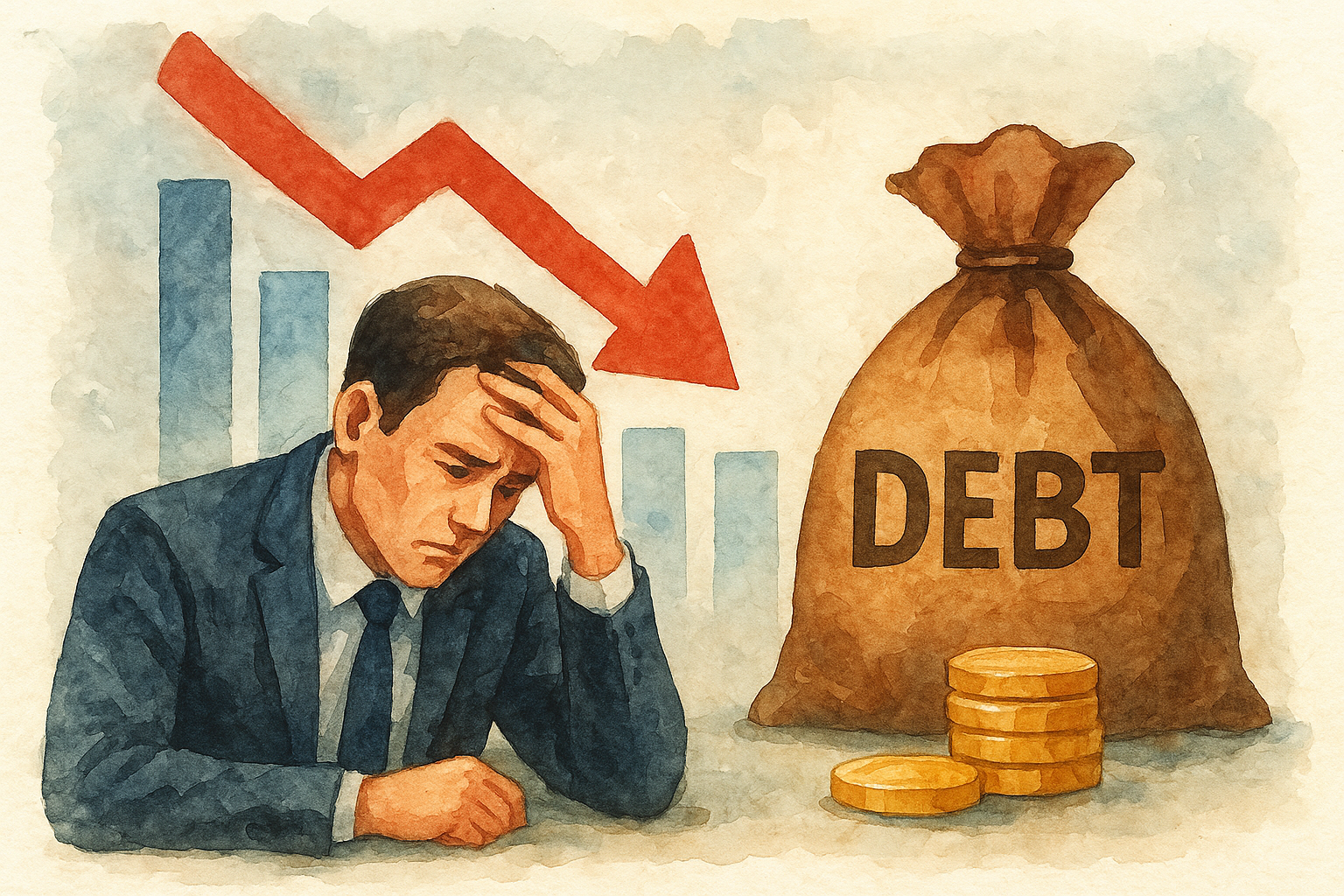
Bad debt expense is the cost a company recognizes when it determines that some of its accounts receivable will not be collected. Under accrual accounting, firms must match revenues with the expenses incurred to generate them, and when customers default or accounts become uncollectible, the loss is recorded as bad debt expense to reflect the true net realizable value of receivables. This recognition helps ensure financial statements present a realistic view of future cash inflows and profitability.
Recording bad debt expense can be done in different ways depending on accounting rules and company policy. The allowance method estimates probable uncollectible accounts and records an allowance for doubtful accounts (a contra-asset) alongside the bad debt expense, while the direct write-off method records the expense only when a specific account is deemed uncollectible. Both approaches affect reported earnings and balance sheet presentation, but they differ in timing and alignment with the matching principle.
## Similar Accounting Terms
When studying bad debt expense, it helps to understand related concepts that appear in financial statements and accounting policies. These terms are often used interchangeably in casual conversation, but they have distinct meanings and roles in accounting for credit losses.
Allowance For Doubtful Accounts
The allowance for doubtful accounts is a contra-asset account that reduces gross accounts receivable to the amount management expects to collect. Companies estimate this allowance based on historical loss rates, current economic conditions, and specific customer credit risks. Establishing an allowance involves recording bad debt expense that flows through the income statement and a corresponding increase to the allowance account on the balance sheet.
Provision For Doubtful Accounts
A provision for doubtful accounts is another way to describe the periodic estimate recorded to cover expected losses on receivables. This provision is effectively the same as the bad debt expense entry under the allowance method: an expense recognition paired with an addition to the allowance for doubtful accounts. Some entities use “provision” terminology in internal reporting or when aligning with IFRS nomenclature.
Accounts Receivable And Net Realizable Value
Accounts receivable represent amounts billed to customers for goods or services provided on credit. Bad debt expense and the allowance for doubtful accounts work together to present accounts receivable at their net realizable value—the amount expected to be collected. Net realizable value equals gross receivables minus the allowance and is the figure most relevant to investors and lenders evaluating liquidity.
Write-Offs And Recoveries
A write-off occurs when a specific receivable is removed from the books because collection is deemed impossible. Under the allowance method, the write-off reduces both accounts receivable and the allowance for doubtful accounts, with no immediate effect on bad debt expense at the time of write-off (the expense was estimated earlier). If a previously written-off receivable is later collected, the company reinstates the receivable and records cash collection; any recovery will increase cash and may be recognized as a gain or reversal through the allowance account, depending on the method used.
## Common Misconceptions
There are several widespread misconceptions about bad debt expense that can lead to incorrect accounting choices or misinterpretation of financial statements. Clarifying these myths helps managers, investors, and accountants apply the correct treatment and understand its implications.
Bad Debt Expense Is Not Merely A Tax Tool
A common belief is that bad debt expense can be manipulated to reduce taxable income arbitrarily. While recognizing bad debt expense does lower pre-tax income, tax authorities require specific substantiation. Under tax rules, businesses often must demonstrate that receivables are actually worthless before claiming deductions, and timing differences between financial accounting and tax recognition can be disallowed. Thus, bad debt expense is primarily an accounting recognition of expected credit losses, not a discretionary tax lever.
Recognition Always Requires Customer Bankruptcy
Another misconception is that a customer must declare bankruptcy before a company records bad debt expense. In reality, firms estimate credit losses based on numerous indicators—late payments, deteriorating industry conditions, or prolonged delinquency—well before legal bankruptcy proceedings may begin. The allowance method anticipates probable losses, so recognition can precede any formal insolvency event.
Allowance Method And Direct Write-Off Are Interchangeable
Some think the allowance and direct write-off methods yield identical results. While both ultimately charge uncollectible amounts to expense, they differ materially in timing and the depiction of financial position. The allowance method aligns with generally accepted accounting principles (GAAP) and IFRS by matching estimated losses to the period of the related revenues. The direct write-off method delays recognition until collection is unlikely, potentially overstating assets and mismatching revenues and expenses—this makes it unacceptable for many companies under GAAP unless bad debts are immaterial.
Bad Debt Expense Only Affects The Income Statement
Although bad debt expense appears on the income statement, its balance sheet effects through the allowance for doubtful accounts are equally important. Over- or underestimating bad debt expense affects the carrying value of receivables, working capital ratios, and any covenants tied to balance sheet metrics. Stakeholders should evaluate both the expense and the allowance to understand liquidity and credit risk exposure fully.
Estimations Are Purely Subjective And Unreliable
Finally, some believe that because estimating bad debt involves judgment, the numbers are unreliable and irrelevant. While estimates depend on judgment, they are grounded in historical data, current trends, and risk assessment processes. Robust methodologies—aging schedules, loss rate models, and scenario analyses—improve reliability and comparability across reporting periods. Transparent disclosures about assumptions and sensitivity analyses further enhance usefulness to users of financial statements.
## Use Cases
Bad debt expense appears in many practical contexts across businesses of different sizes and industries. Understanding how and when it is applied helps companies manage credit risk and present accurate financial information.
Small And Medium Enterprises
SMEs that sell on credit must account for customers who fail to pay. For many small businesses, cash flow is critical, and timely recognition of bad debt expense can prompt better credit controls, such as tightening credit terms or requiring deposits. Often, small firms initially use simpler methods—like direct write-offs—until they reach a scale where allowance estimates provide meaningful improvements in financial reporting.
Large Corporations And Revenue Recognition
Large businesses with high sales volumes and complex customer relationships typically use systematic allowance models to record bad debt expense. Such models may integrate historical loss rates, forward-looking economic indicators, and customer-specific risk assessments. For companies with significant accounts receivable, accurate bad debt expense measurement is essential for compliance with revenue recognition standards and for providing realistic forecasts to investors.
Financial Institutions And Credit Risk Management
Banks and other lenders have sophisticated methodologies for measuring expected credit losses, which function similarly to bad debt expense but are often governed by stricter regulatory frameworks. Under both IFRS 9 and current bank regulatory guidance, institutions may use expected credit loss models that require forward-looking information. Recognizing credit losses promptly helps maintain capital adequacy and aligns risk management with financial reporting.
Industry-Specific Considerations
Certain industries face unique collection challenges that affect bad debt expense practices. Healthcare providers, for example, often contend with patient billing complexities and insurance reimbursements, requiring detailed aging analyses and payer-specific loss rates. Telecommunications and utilities companies may have high volumes of small receivables and use statistical models to estimate bad debt expense efficiently.
Tax Reporting And Timing Differences
Tax authorities often require a different approach to deducting uncollectible accounts compared to financial reporting. While financial statements emphasize accrual estimates, tax deductions usually demand proof that a debt is worthless or partially worthless. This creates timing differences between when bad debt expense is recognized for GAAP/IFRS and when it is deductible for tax purposes, resulting in deferred tax assets or liabilities.
Practical Example: Percentage Of Sales Versus Aging Method
Two common estimation techniques illustrate practical application. The percentage-of-sales method applies a historical loss rate to current period credit sales to determine bad debt expense, focusing on matching expense with the period’s revenues. The aging method categorizes outstanding receivables by age and applies different loss rates to each bucket, producing a detailed estimate for the allowance account and net realizable value. Companies may choose one method over another based on materiality, complexity, and the predictability of customer payment behavior.
Internal Controls And Operational Responses
Recording bad debt expense should go hand-in-hand with operational processes to mitigate credit losses. Firms often implement credit approval systems, periodic customer reviews, and collection strategies. Tracking trends in bad debt expense can trigger strategic decisions—such as revising credit policies, adjusting pricing to cover credit costs, or investing in improved billing and collections technology.
Disclosure And Investor Communication
Transparent disclosure about the methods and assumptions used to estimate bad debt expense is critical for investors and analysts. Financial statements typically include notes explaining the allowance methodology, key inputs, and sensitivity to changes in assumptions. Clear communication about increases in bad debt expense—whether due to macroeconomic shifts, concentration risk, or one-off events—helps stakeholders assess going-concern and performance implications.
Regulatory And Standards Considerations
Finally, accounting standards influence how companies measure and present credit losses. Under U.S. GAAP, many entities follow the allowance method with models that can incorporate expected losses. IFRS requires expected credit loss measurement under IFRS 9, emphasizing forward-looking information. Companies must align internal models with applicable standards and document their assumptions and governance for auditors and regulators.